
We are a referral-based specialist endodontic practice. Your dentist has referred you to us because your case requires specialist assessment or treatment — either because of the complexity of your tooth, the level of infection, or because specialist technology such as a surgical microscope or CBCT 3D imaging is needed to give you the best outcome. This page covers everything you need to know before your appointment.
Before your appointment
What to bring
- Your referral letter from your dentist — this helps us understand your history and what your dentist has already observed.
- Any X-rays your dentist has taken — digital X-rays can be emailed to info@swendo.com.au ahead of your appointment to save time on the day.
- Your Medicare card and private health fund card — we use HICAPS for on-the-spot rebate claims.
- A list of your current medications — including supplements and over-the-counter medicines. Some medications affect anaesthetic and bleeding.
- Arrive 10 minutes early to complete a short health and medical history form before your appointment begins.
- Allow time for parking — details are in the location section below.
If you are having IV sedation
You must not eat or drink anything (except water) for at least 6 hours before your appointment. Arrange for a responsible adult to drive you home and stay with you for the rest of the day — we cannot administer IV sedation without a confirmed driver. Wear comfortable clothing and leave valuables at home.
Your questions answered
An endodontist is a dental specialist who has completed a minimum of three years of additional university training — beyond a dental degree — in the diagnosis and treatment of diseases affecting the dental pulp (the nerve and blood supply inside the tooth) and the tissues surrounding the tooth roots. At Southwest Endodontic Centre, Dr Deepak Chellappa and Dr Jimmy Chan both hold Doctorates of Clinical Dentistry in Endodontics.
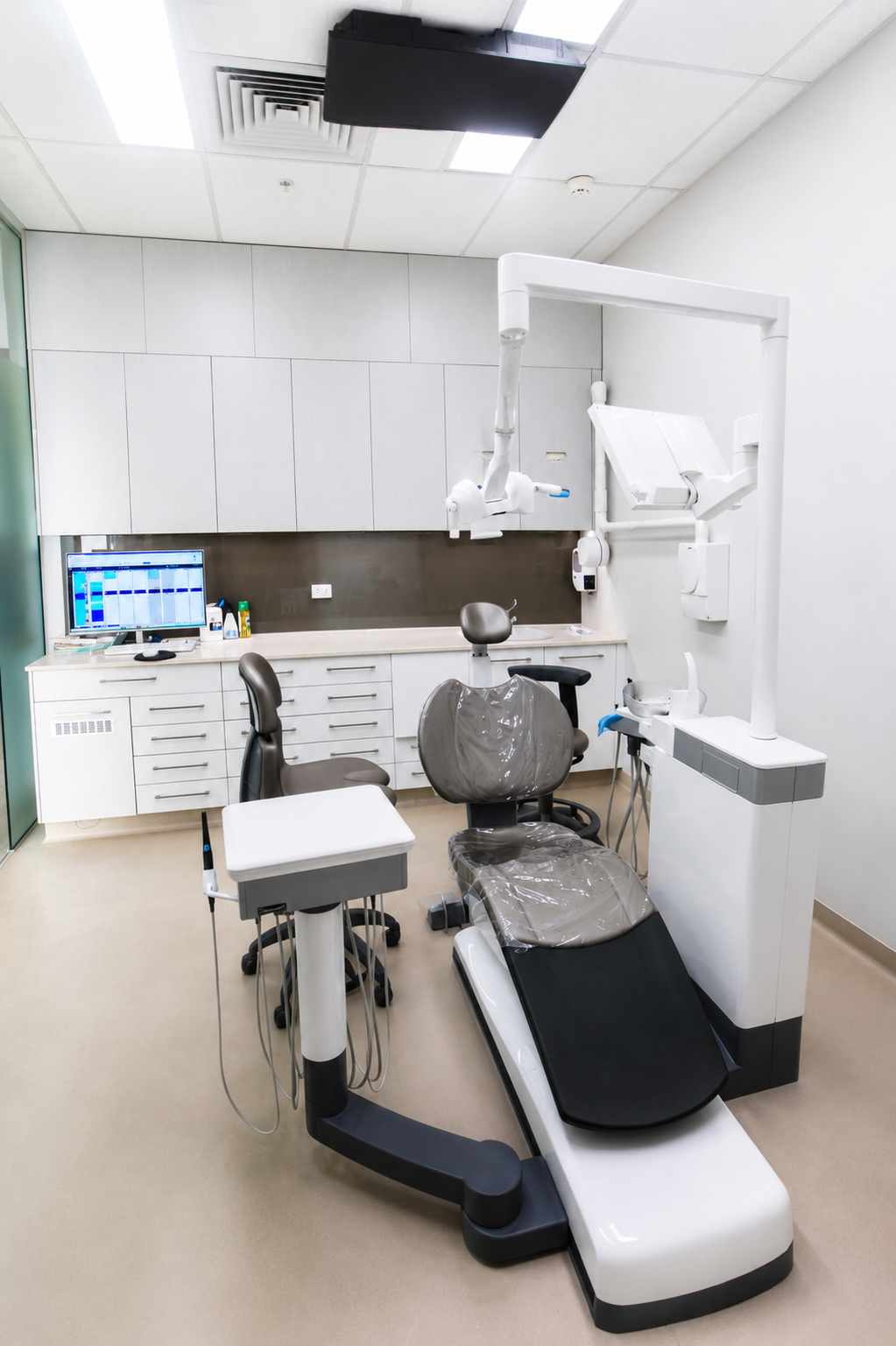
Specialist endodontists see endodontic cases exclusively — root canal treatments, retreatments, surgical procedures, dental trauma, and complex diagnostic cases make up their entire caseload. They use technology not typically available in general practice: operating microscopes providing up to 25× magnification and CBCT 3D imaging for precise diagnosis. Your dentist has referred you because your case warrants this level of expertise and equipment.
Root canal treatment — also called endodontic treatment — is a procedure to save a tooth whose inner pulp (the nerve and blood supply) has become infected or died. The pulp can be damaged by deep decay that reaches the centre of the tooth, a crack exposing the nerve, dental trauma, or repeated dental procedures on the same tooth.
During treatment, the specialist makes a small opening through the crown of the tooth, removes the infected or dead pulp tissue, and carefully cleans and shapes the canal system. Once clean, the canal system is sealed with a biocompatible filling material to prevent reinfection. Your tooth is then returned to your dentist for a permanent restoration — usually a crown. Success rates for specialist endodontic treatment are 90 to 95 per cent.
This is the most common concern patients have, and it deserves an honest answer: root canal treatment itself should not hurt. It is performed under local anaesthetic and the vast majority of our patients are surprised at how comfortable the procedure is. Modern anaesthetic techniques are highly effective, and we always take the time to ensure you are completely numb before we begin.
The important thing to understand is that it is the infection before treatment that causes severe pain — not the procedure. Root canal treatment is what resolves the infection and eliminates the pain. After the appointment, some mild soreness or tenderness around the tooth for two to five days is normal and managed easily with paracetamol and ibuprofen. Severe pain after treatment is uncommon. If you are anxious, oral or IV sedation options are available — please mention this when you book.
Most root canal treatments take 60 to 90 minutes per appointment. Straightforward cases — such as a single-canal front tooth with a simple infection — can often be completed in one visit. More complex cases, including upper molars with multiple curved canals, long-standing infections, or retreatment cases, may require two appointments.
Please allow a little extra time on the day — the local anaesthetic needs time to take full effect, and we will never rush that step. We will give you a clear estimate of appointment length at your consultation once we have reviewed your X-rays and examined the tooth.
Most root canal treatments are completed in one to two appointments. The number depends on the tooth, the extent and complexity of the infection, and the anatomy of the root canal system. Retreatment of a previously root-filled tooth that has failed may require an additional appointment. Apical surgery is typically completed in a single visit.
Your first appointment with us is a consultation — we examine the tooth, review your X-rays, take any additional imaging needed, and discuss our findings and recommendations with you in plain English. We will not begin treatment until you are comfortable with the plan and have had all your questions answered.
In most cases, yes — particularly for back teeth. Root canal treated teeth lose moisture over time and can become more brittle, making them vulnerable to cracking or fracturing under chewing forces. A well-fitting crown provides full coverage protection and dramatically reduces this risk.
We will advise you clearly on whether a crown is recommended for your specific tooth — some front teeth with minimal damage can be restored with a bonded composite filling instead. Whatever the recommendation, it is important to return to your referring dentist promptly after completing treatment to organise final restoration. Leaving the tooth with only the temporary filling we place at the end of treatment is not safe long-term — the temporary can leak and re-contamination of the canal system is a real risk.
Dental anxiety is extremely common — you are not alone, and there is nothing to be embarrassed about. Many of our patients arrive nervous, and our team is experienced in managing anxiety with patience, clear communication, and a pace that works for you. We will always explain what we are about to do before we do it, and you can ask us to pause at any time.
For patients who need additional support we offer two sedation options. Oral sedation involves taking a prescribed tablet before your appointment to reduce anxiety and promote a calm, relaxed state — you remain conscious and can still communicate. IV sedation is administered by a licensed anaesthetist on the day; you will be deeply relaxed, responsive to instruction, but will have little to no memory of the procedure. Please mention at the time of booking that you would like to discuss sedation, and we will ensure the right option is arranged for you.
If you are having standard root canal treatment under local anaesthetic only, you are fine to drive home once the numbness has worn off — typically two to three hours after leaving the practice. Most patients drive themselves without any issue.
If you are having IV sedation, you must not drive, operate machinery, sign legal documents, or make important decisions for 24 hours after your procedure. You must arrange for a responsible adult to drive you home and stay with you for the remainder of the day. This is a strict requirement — we cannot proceed with IV sedation unless transport is confirmed in advance. Please organise this before your appointment day.
Yes. Local anaesthetic used in dental treatment has a well-established safety record during pregnancy and is considered safe at all stages. Treating a dental infection during pregnancy is actually important — an untreated dental abscess can spread and has potential implications for both the mother and the developing baby. Leaving an infection untreated is generally not the right approach.
Digital X-rays use very low levels of radiation and a lead apron is used as standard to minimise any exposure. IV sedation is not recommended during pregnancy. Please tell us you are pregnant when you book so we can plan your care appropriately and liaise with your obstetrician if needed.
For standard root canal treatment, most patients return to work the same day or the following day. Some mild tenderness around the tooth is normal but should not prevent you from working in most occupations. We recommend avoiding hard or crunchy foods on the treated side for a few days.
For apical surgery, we recommend taking the day of surgery off and the following day as well. You may experience mild to moderate swelling around the surgical site that peaks at 48 hours and gradually resolves over the following week. Strenuous physical activity should be avoided for three to five days. Desk or office work is usually fine from the day after surgery.
- Numbness after treatment: The local anaesthetic will keep the area numb for two to four hours. Avoid hot drinks and food until the feeling has fully returned — it is easy to burn or bite yourself without realising.
- Mild soreness is normal: Some aching or tenderness around the treated tooth for two to five days is completely normal and does not indicate a problem. It is your body's natural healing response.
- Pain relief: Take paracetamol and ibuprofen as directed on the packaging. Alternating the two every few hours (if you can safely take both) is effective for most patients. You do not need a prescription.
- Avoid chewing on the treated tooth: Until the tooth has been permanently restored by your dentist, avoid putting heavy pressure through it. The temporary filling is not designed for long-term use.
- Swelling: Minor swelling after root canal treatment occasionally occurs but is uncommon. After apical surgery, some swelling is expected. Apply an ice pack (20 minutes on, 20 minutes off) for the first 24 hours.
- When to call us: Contact our practice if you experience severe pain not controlled by over-the-counter pain relief, significant or increasing swelling, a fever, or if you lose your temporary filling.
- Return to your dentist promptly: Please see your referring dentist within four to six weeks to arrange permanent restoration of the tooth. Do not delay this step.
The success rate for specialist endodontic treatment is 90 to 95 per cent — but no medical or dental procedure is guaranteed, and we will always give you an honest prognosis before treatment begins. The most common reasons a treatment may not fully resolve include:
- Complex or unusual canal anatomy — C-shaped canals, extreme curvatures, or additional canals not detectable before treatment. Our CBCT 3D imaging significantly reduces this risk by mapping the root system in three dimensions before we begin.
- Bacteria in inaccessible spaces — surviving in lateral canals or dentinal tubules beyond the reach of conventional instrumentation.
- A vertical root fracture — a crack in the root itself that may not be visible before treatment. Our operating microscope and CBCT imaging allow us to identify most fractures in advance.
- Delayed crown placement — if the permanent crown is not placed promptly, bacteria can re-enter the tooth and contaminate the treated canals.
- Persistent periapical cyst — in some cases a cyst at the root tip requires surgical treatment even after successful root canal treatment. Apical surgery addresses this.
If treatment is unsuccessful, retreatment or apical surgery may be an option. We will discuss all pathways with you at your review appointment.
- Eat before you come: Have a normal meal before your appointment. Treating on an empty stomach can make you feel unwell, particularly if the appointment is long. (Exception: follow fasting instructions if you are having IV sedation.)
- Avoid alcohol for 24 hours before: Alcohol can interfere with local anaesthetic effectiveness and affect your recovery.
- Bring your medication list: Blood thinners, bisphosphonates, immunosuppressants, and other medications affect how we plan and manage your treatment. Bring a complete list.
- Tell us about allergies: Particularly any known allergy to local anaesthetic, latex, or antibiotics.
- Tell us if you are pregnant: We will adapt your care accordingly.
- Bring a support person if you wish: You are welcome to bring someone with you, particularly if you are anxious or having sedation.
- Allow extra time: Do not book tight commitments immediately after your appointment. If your case is more complex than anticipated, we never want you to feel rushed.
You always have the right to decline treatment and make your own informed decision. Here is an honest overview of the alternatives:
Decline treatment: If you choose not to proceed, the infection will not resolve on its own. Dental infections generally worsen over time, spreading to surrounding bone and potentially causing a dental abscess — which in some cases can become a serious health issue requiring hospitalisation. This option is not recommended unless extraction is also being declined on palliative or personal grounds.
Extract the tooth: Removing the tooth is a valid option, particularly when the prognosis for saving the tooth is poor or cost is a significant factor. If the tooth is extracted, your options for the resulting gap include:
- Leave the space: The simplest option, but neighbouring teeth gradually drift toward the gap and opposing teeth can over-erupt, potentially causing bite problems, jaw discomfort, and difficulty cleaning the remaining teeth.
- Removable partial denture: A removable plate with replacement teeth. Affordable but less comfortable than fixed options, and requires daily removal for cleaning. Some patients find them difficult to adapt to.
- Fixed bridge: Permanent replacement teeth anchored to the adjacent natural teeth, which must be reduced (prepared) to support the bridge. A reliable long-term solution, but involves cutting down healthy adjacent teeth — an important consideration.
- Dental implant: A titanium implant placed into the jawbone topped with a crown — the most natural-feeling and durable long-term solution. Not suitable for everyone; requires surgery, a healing period of several months, and a higher upfront investment.
- Orthodontics: In selected cases where alignment allows, the space may be closed with braces or clear aligners. Generally only practical in younger patients or when adjacent teeth also require orthodontic treatment.
We are happy to discuss any of these options with you in detail at your consultation.
We use a fixed-fee system — your exact quote is confirmed at the time of booking, before your appointment. The following are indicative fees:
- Consultation + radiographs: $300
- Root canal treatment — front teeth and premolars: $2,100–$2,700
- Root canal treatment — molars: $2,400–$3,000
- Apical surgery: $1,500–$2,500
Additional costs may apply for core restorations, post removal, or fractured instrument removal — these will always be disclosed to you in advance. HICAPS is available for on-the-spot private health fund rebate claims. Payment plans are available through a third-party provider — please speak with our reception team at your consultation to discuss this option. All fees are subject to change; the fee confirmed at your booking appointment is the fee that applies to your treatment.
Location and parking — Liverpool
Southwest Endodontic Centre
Shop 1/420 Macquarie Street, Liverpool NSW 2170
Corner of Hume Highway and Macquarie Street — ground floor, opposite Best Buy Autos.
Parking nearby
- Secure Parking at 129 Terminus Street: adjacent to Chemist Warehouse, directly beside the practice. Open 24 hours — the most convenient option for longer appointments.
- Northumberland Street council car park: approximately a 2-minute walk from the practice.
- Metered street parking: available on Macquarie Street and adjoining streets.
If your appointment is likely to run longer than 60 minutes, we recommend Secure Parking at 129 Terminus Street to avoid needing to leave mid-appointment.
Appointments
Southwest Endodontic Centre is a referral-based practice. Your dentist will send your referral directly to our practice, and our team will contact you within one business day to arrange your appointment at a time that suits you.
If your referral is marked urgent — for example, you are in significant pain or have a spreading infection — same-day assessment is available. Please ask your dentist to flag this when they refer you, or call us directly.
- Phone: (02) 9129 8806
- ✉ Email: info@swendo.com.au
- Hours: Monday–Friday | Call (02) 9129 8806 for hours
Have a question not answered here?
Call us on (02) 9129 8806 or email
info@swendo.com.au — we are happy to
help before and after your appointment.