
What is root resorption?
Root resorption is the progressive loss of dental hard tissue — dentine, cementum and occasionally enamel — caused by the activity of clastic cells. It occurs when the normal protective layer of the root (the precementum or predentine) is damaged or lost, allowing multinucleated clastic cells to attach to the surface and begin resorbing tooth structure.
Unlike a carious lesion, resorption is not caused by bacteria and does not respond to restorative intervention alone. It is most often painless in the early stages and is frequently discovered incidentally — a slow, silent process that can destroy significant root structure before the patient or treating clinician becomes aware of it.
Accurate diagnosis requires three-dimensional imaging and microscopic examination. Resorption is one of the strongest clinical indications for CBCT scanning in endodontics.
Types of root resorption
Resorption is classified by its location and behaviour. Correct classification is critical because it determines both the treatment approach and the prognosis.
- Internal resorption — resorption originating from within the root canal itself. The pulp tissue transforms into granulomatous tissue containing clastic cells, which begin resorbing the internal canal wall. It appears radiographically as a symmetrical, oval enlargement of the canal. Usually an incidental finding. Managed with root canal treatment.
- External cervical resorption (ECR) — the most clinically challenging form. The resorption begins at or just below the cementoenamel junction on the outer surface of the root and invades the tooth from the side. Classically presents as a "pink spot" visible through the crown. Treatment usually requires a surgical or internal approach to access and repair the defect with MTA or bioceramic material.
- External apical resorption — shortening or blunting of the root apex, commonly associated with orthodontic tooth movement, chronic periapical inflammation, or periapical pathology. Usually self-limiting once the cause is removed.
- External inflammatory resorption — a rapidly progressive process seen after dental trauma or avulsion, driven by pulpal necrosis and damage to the cementum. Demands prompt root canal treatment to halt progression.
- Replacement resorption (ankylosis) — the tooth root is gradually replaced by bone. Typically follows severe trauma (particularly avulsion and delayed replantation). Cannot be stopped with conventional treatment; prognosis is poor and decoronation may be considered in growing patients.
Common causes and risk factors
Resorption almost always follows an insult to the protective barrier of the root. Common triggers include:
- Dental trauma — luxation injuries, avulsion and replantation are the most potent triggers of external resorption.
- Orthodontic treatment — particularly prolonged or heavy forces, which can cause external apical resorption.
- Internal bleaching of non-vital teeth using older thermocatalytic techniques with high-concentration hydrogen peroxide — a recognised cause of external cervical resorption.
- Pulpal infection and necrosis — driving inflammatory resorption.
- Chronic pressure from impacted teeth (especially third molars and canines), cysts and tumours.
- Periodontal infection and instrumentation — particularly in combination with other factors.
- Idiopathic resorption — a meaningful proportion of cases occur with no identifiable cause, even after comprehensive assessment.
A detailed history — including trauma, orthodontics and previous bleaching — is often more diagnostic than the radiograph alone.
Diagnosis with CBCT
Standard 2D periapical radiographs will often suggest resorption but almost always underestimate its extent. Internal and external resorption can look identical on a 2D X-ray, yet require completely different treatment approaches. Misdiagnosis at this stage can lead to inappropriate treatment and tooth loss.
CBCT 3D imaging is the diagnostic gold standard for resorption. A small field-of-view CBCT allows us to:
- Distinguish internal from external resorption with confidence.
- Precisely localise the defect in three dimensions.
- Determine whether the canal wall has been perforated.
- Measure the extent of remaining sound tooth structure.
- Assess the relationship of the lesion to the crestal bone, adjacent teeth and anatomical structures.
- Provide an honest, evidence-based prognosis before any treatment is commenced.
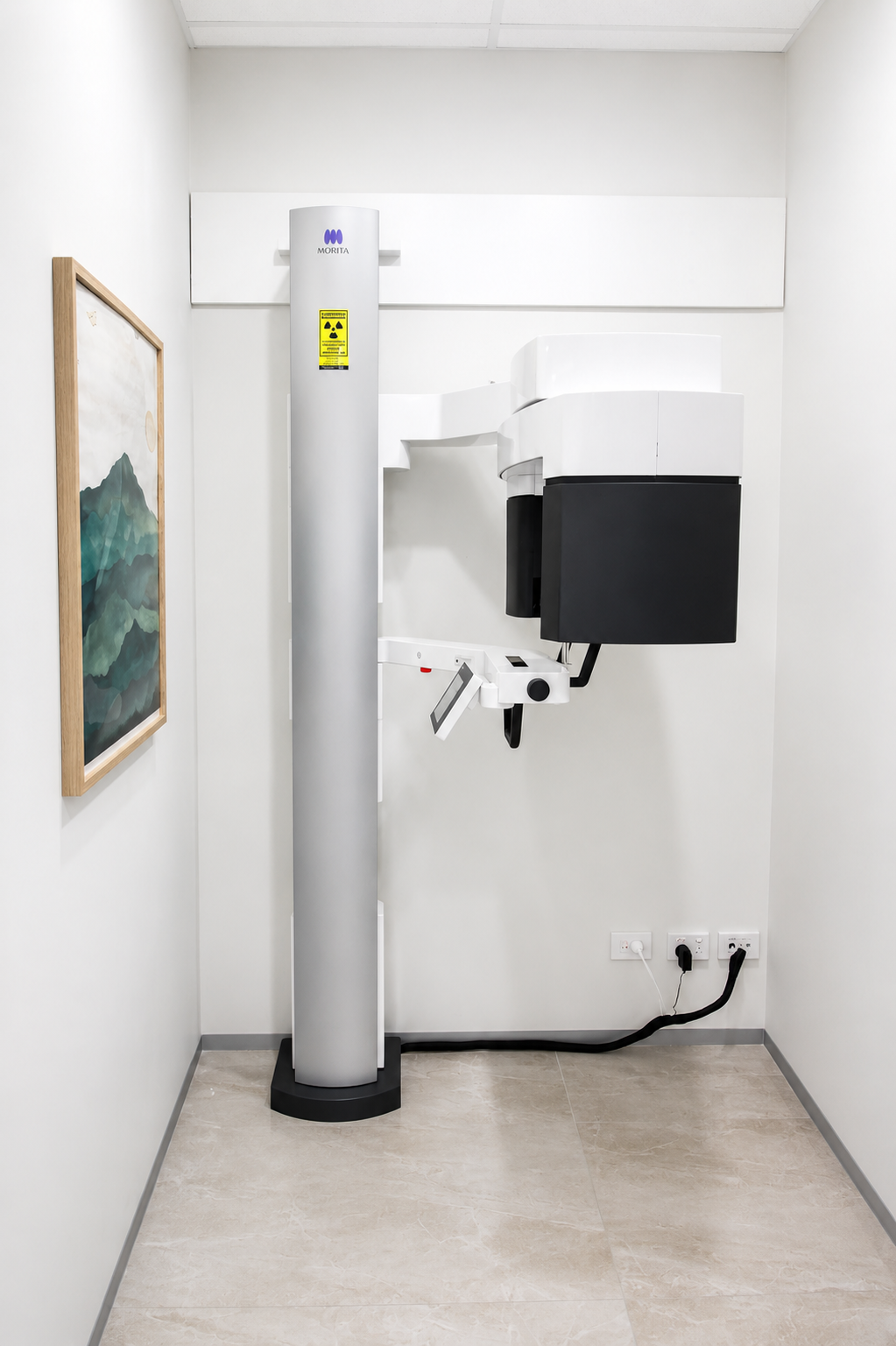
CBCT is available on-site at our Liverpool practice, and reports can be made available to referring dentists on request.
Treatment approach
Treatment is highly dependent on the type, location and extent of the lesion. There is no single protocol — each case is planned individually.
- Internal resorption — root canal treatment. Removal of the granulomatous tissue, thorough disinfection (often with calcium hydroxide as an interappointment medicament), and three-dimensional obturation. MTA or a bioceramic sealer is frequently used to seal the resorptive defect. Prognosis is generally good when the canal wall has not been perforated.
- External cervical resorption — the most complex form. Heithersay classification (Class 1–4) guides prognosis. Smaller lesions (Class 1–2) are often repaired predictably; larger lesions (Class 3–4) carry a guarded prognosis. Access may be intracoronal (through the crown), surgical (raising a flap to access the lesion from outside the root), or a combination. The defect is debrided under the operating microscope and repaired with MTA or bioceramic cement.
- External apical resorption — usually self-limiting once the underlying cause (orthodontic force, periapical infection) is addressed. Root canal treatment is indicated if the pulp is necrotic or the apical resorption is inflammatory in nature.
- External inflammatory resorption after trauma — prompt root canal treatment with calcium hydroxide dressings is the key to halting progression.
- Replacement resorption — generally not amenable to treatment. In growing patients, decoronation may be considered to preserve alveolar bone for future implant placement.
Prognosis — an honest conversation
The prognosis of a resorptive lesion depends almost entirely on early diagnosis and accurate classification. Key prognostic factors include:
- Type of resorption.
- Size and extent of the lesion on CBCT.
- Whether the canal wall or crestal bone has been breached.
- The amount of remaining sound root and coronal structure.
- The presence or absence of perforation into the periodontium.
Some resorption cases can be managed with a very good long-term prognosis. Others — particularly advanced external cervical resorption or replacement resorption — have a guarded or poor prognosis, and extraction with implant planning may be the more predictable option. We provide an honest, CBCT-based assessment before any treatment is commenced, so that patients and referring dentists can make fully informed decisions.
Wollongong patients: Specialist assessment and treatment of root resorption is also available at our sister practice, Wollongong Endodontics — the only specialist endodontic clinic in the Illawarra.
Referring a patient with suspected resorption
Resorption is best referred early. Typical triggers for referral include:
- An unexplained radiolucency on the root on routine radiographs.
- A pink discolouration visible through the crown ("pink spot").
- A history of dental trauma, avulsion, or orthodontic treatment.
- Previous internal bleaching of a non-vital tooth.
- Radiographic changes that do not match a typical periapical infection pattern.
- Progressive widening of the canal on sequential radiographs.
When referring, please include any available periapical radiographs and the clinical history. We will arrange small-field CBCT as required and provide a written report with our diagnosis, proposed treatment and prognosis before commencing care. Submit referrals through our online referral form or call (02) 9129 8806 for a pre-referral discussion.
Refer a Patient Online Why Refer to Us
Frequently Asked Questions
Root resorption is the progressive loss of tooth structure (dentine, cementum, and sometimes enamel) caused by the activity of clastic cells. It can occur inside the root canal (internal resorption) or on the outer surface of the root (external resorption). Both forms are usually painless in the early stages and are often discovered incidentally on routine radiographs.
Common triggers include dental trauma, orthodontic tooth movement, internal bleaching using older techniques, pulpal inflammation, periodontal infection, chronic pressure from impacted teeth or cysts, and in some cases viral infections. A proportion of cases remain idiopathic — no identifiable cause is found even after thorough assessment.
Standard periapical X-rays can suggest resorption but cannot reliably distinguish internal from external types, nor accurately assess extent. CBCT 3D imaging is the diagnostic gold standard — it localises the lesion precisely, determines whether the canal wall is perforated, and allows accurate prognosis and treatment planning. Resorption is one of the strongest indications for CBCT in endodontics.
Often, yes — but it depends on the type, location and extent of the lesion. Early, contained internal resorption and small external cervical resorption lesions have good prognoses with appropriate treatment. Large lesions that have perforated the root, extended below the crestal bone, or destroyed significant root structure carry guarded prognoses. Early diagnosis is the single biggest factor in saving the tooth.
Treatment is tailored to the type of resorption. Internal resorption is managed with root canal treatment, usually with calcium hydroxide disinfection and MTA or bioceramic obturation to seal the defect. External cervical resorption requires access to the lesion — sometimes through the crown, sometimes via a surgical approach — followed by cleaning and repair with MTA or bioceramic material. Replacement resorption (ankylosis) generally cannot be stopped and the prognosis is poor.
Refer as soon as resorption is suspected — prognosis worsens significantly with delay. Typical triggers for referral include an unexplained radiolucency on the root, a pink discolouration of the crown (the classic "pink spot"), a history of trauma or orthodontics, or radiographic changes that don't match a typical periapical pattern. We will arrange CBCT imaging as required and provide an honest prognosis before any treatment is commenced.